If you’re planning an eco-friendly wedding, I need you to hear me on this: you don’t have to do it perfectly for it to matter. You’re not applying for a sustainability medal. You’re planning a wedding.
And if Pinterest has you spiraling like, “Wait, am I a bad person if I use real candles and printed menus,” I’m here to gently take your phone, set it face down, and hand you a plan (with love).
I’m at weddings most weekends as a live watercolor artist and calligrapher, so I see what works in real life, not just in theory. The couples who pull off an eco-friendly wedding that still feels elevated all do the same thing: they pick their priorities, build systems early, and stop treating sustainability like an all-or-nothing personality trait.
Okay, here’s the deal:
Pick Your Priorities Without Trying To Fix Everything
The Eco-Friendly Wedding Checklist Timeline (No 11 P.M. Panic Buys)
The Eco-Friendly Choices That Make The Biggest Impact
Experience-First Decisions That Reduce Waste Naturally
Questions That Instantly Tell You If A Vendor Gets It
Permission To Be Human, Not Perfect

Image Credit: Sydney Mormon Photography
About the Author
I’m Danison, the face (and the paintbrush) behind Bowtie & Brush. I show up to weddings and events with watercolor, calligraphy, and a steady, calm presence, turning guest moments into keepsakes that feel personal and elevated. I’m detail-obsessed and logistics-friendly, so everything looks beautiful and runs smoothly. If you want live art that feels thoughtful, fun, and effortlessly put-together, I’m here for you.
Visit my About page to see what I’m really bringing to your wedding besides paint and paper.
Start Here: Drop The Sustainability Guilt
The fastest way to burn out is trying to plan an eco-friendly wedding like you’re personally responsible for saving the planet between vendor calls. That pressure helps nobody.
Instead, I want you to aim for “intentionally better than default.” Because an eco-friendly wedding isn’t one perfect decision. It’s a bunch of smart choices that add up.
Here’s my favorite mental reset: if a swap costs you your peace, it’s not sustainable. The goal is a wedding that feels aligned, not exhausting.
Want the real-world version, not the theory? Read Sustainable Wedding Trends I’m Seeing More of This Year for what couples are actually choosing right now, plus smart swaps that feel elevated.
12–9 Months Out: Choose The Big Levers First
This is the phase where your biggest-impact decisions live. If you only nail a few things, nail these.
Pick Your Top 3 Eco-Friendly Priorities
Choose three areas you care about most. Not ten. Three. Here are some examples:
Food waste
Travel footprint
Florals and decor
Paper and printing
Rentals vs buying
When you pick priorities, your eco-friendly wedding planning instantly gets easier because you stop trying to win every category.
Match The Venue To The Guest Count
A venue that fits your guest list reduces the urge to over-decorate. It also minimizes extra rentals, awkward filler furniture, and “we need more stuff to make this feel full” purchases.
Commit To A Rental-First Mindset
Linens, flatware, glassware, napkins, tables, lounge furniture. Renting is usually the quiet hero of an eco-friendly wedding because it cuts single-use items and prevents you from buying things that will live in your garage forever.
9–6 Months Out: Book Vendors Who Already Think This Way
This is where you build momentum. The right vendor team will make your eco-friendly wedding feel lighter because they’ll already have systems.
If you have to teach every vendor how to reduce waste, you’ll feel like a project manager instead of a fiancé(e). I want you in “host energy,” not “supply chain manager” mode.
Questions That Instantly Tell You If They Get It
When someone truly understands an eco-friendly wedding, they don’t speak in vague buzzwords. They speak in systems.
Ask these:
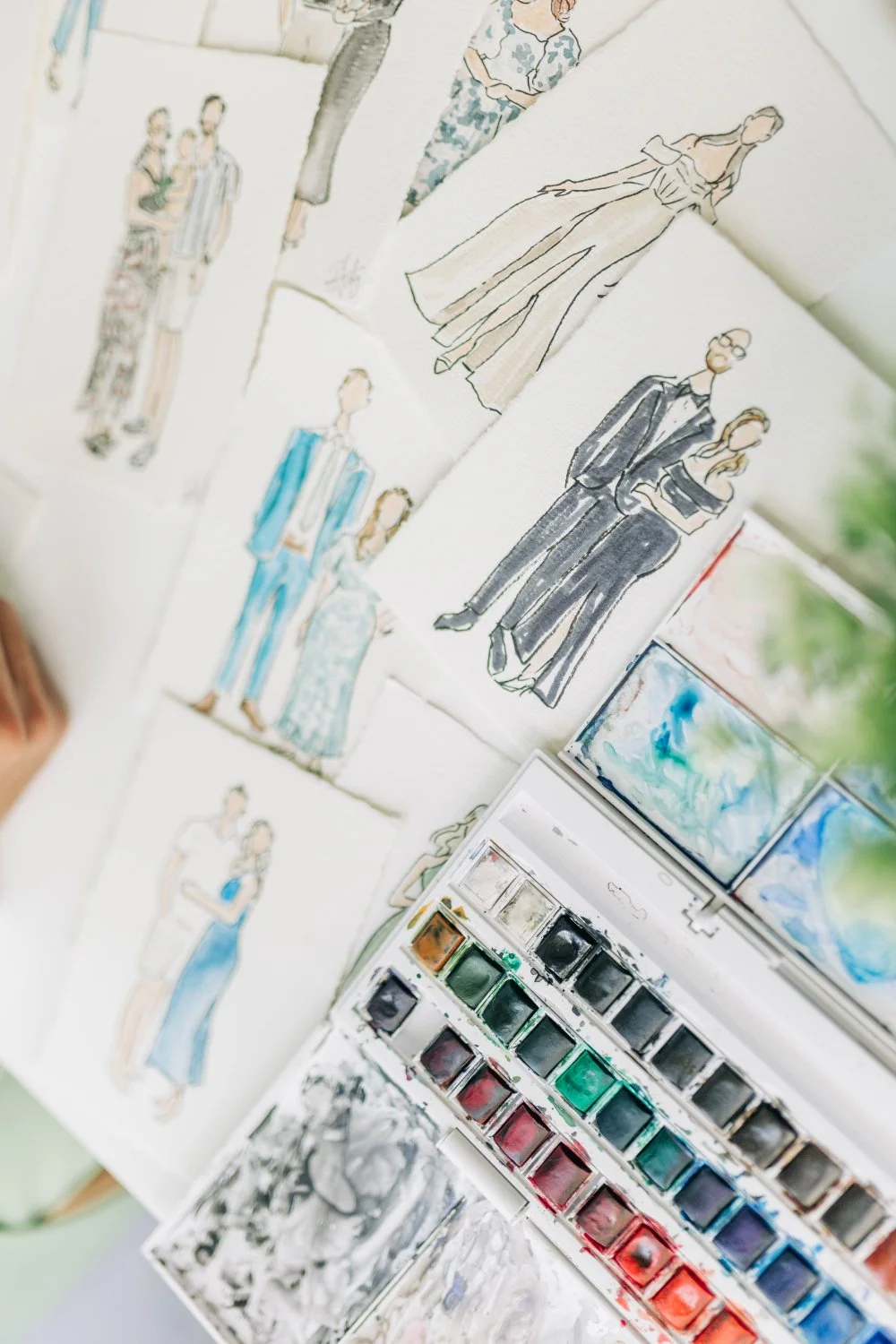
Image Credit: Sydney Mormon Photography
“What do you do by default to reduce waste?” (If they’re legit, they’ll answer fast.)
“Where do couples accidentally create the most waste?” (A pro will have opinions.)
“What swap makes a big impact without making planning harder?” (This separates helpful from performative.)
Now let’s get specific.
Catering
“How do you estimate portions to avoid over-ordering?”
“What happens to leftovers?” (Donation? Staff meals? Compost?)
“Can we plan a service style that reduces plate waste?”
Florals
“Do you design foam-free?”
“Can we repurpose ceremony florals for the reception?”
“Do you source local or in-season blooms when possible?”
“Do you have a donation plan after the wedding?”
Planner or Coordinator
“How do you prevent last-minute panic purchases?” (Because that’s where sustainability goes to die.)
“Do you have a reuse network or rental inventory?”
“What’s your leftover donation plan?”
Venue
“What recycling and compost options do you actually support on-site?”
“Do you require disposables, or can we go fully rental?”
If they respond with “We already do that,” or “Here’s our process,” you found a good one.
6–4 Months Out: Design The Experience, Not The Clutter
This is the phase where people start ordering extras because they’re excited and anxious at the same time (a very relatable combo). This is also the phase where an eco-friendly wedding can either stay intentional or become a cart full of stuff.
Decide What Guests Will Actually Notice
Guests remember how your wedding felt: the energy, the food, the flow, and the personal touches. And yes, they do notice signage when it’s doing its job. The move is choosing signage that’s functional, beautiful, and not just “more for the sake of more.”
Instead of adding more decor, invest in details that pull double duty:
Signage that improves flow (welcome, bar, seating, timeline cues)
Pieces that can be reused or repurposed after (framed welcome sign, reusable seating chart display)
A few high-impact moments that create both experience and keepsake
So instead of buying more decor, invest in experience-based elements that do double duty.
Choose “Entertainment That Becomes The Takeaway”
This is where my world shows up. Live art is one of the easiest ways to support an eco-friendly wedding without making it feel like you’re sacrificing style.
When I paint live watercolor guest portraits or do on-site calligraphy and engraving, guests get an experience and a keepsake in one. People who want one line up. People who don’t, don’t. You avoid over-ordering favors that end up abandoned on tables (and you still get a guest experience that feels premium).
If you want an eco-friendly wedding that still feels like a luxury event, “one great interactive moment” beats “ten small things” every time.
Keep Paper Simple On Purpose
Ask yourself:
Do we need mail-in RSVPs, programs, menus, and signage for everything, or can we simplify a few of these?
Can one well-designed welcome sign replace three smaller signs?
Can we reuse a seating chart display instead of printing individual escort cards?
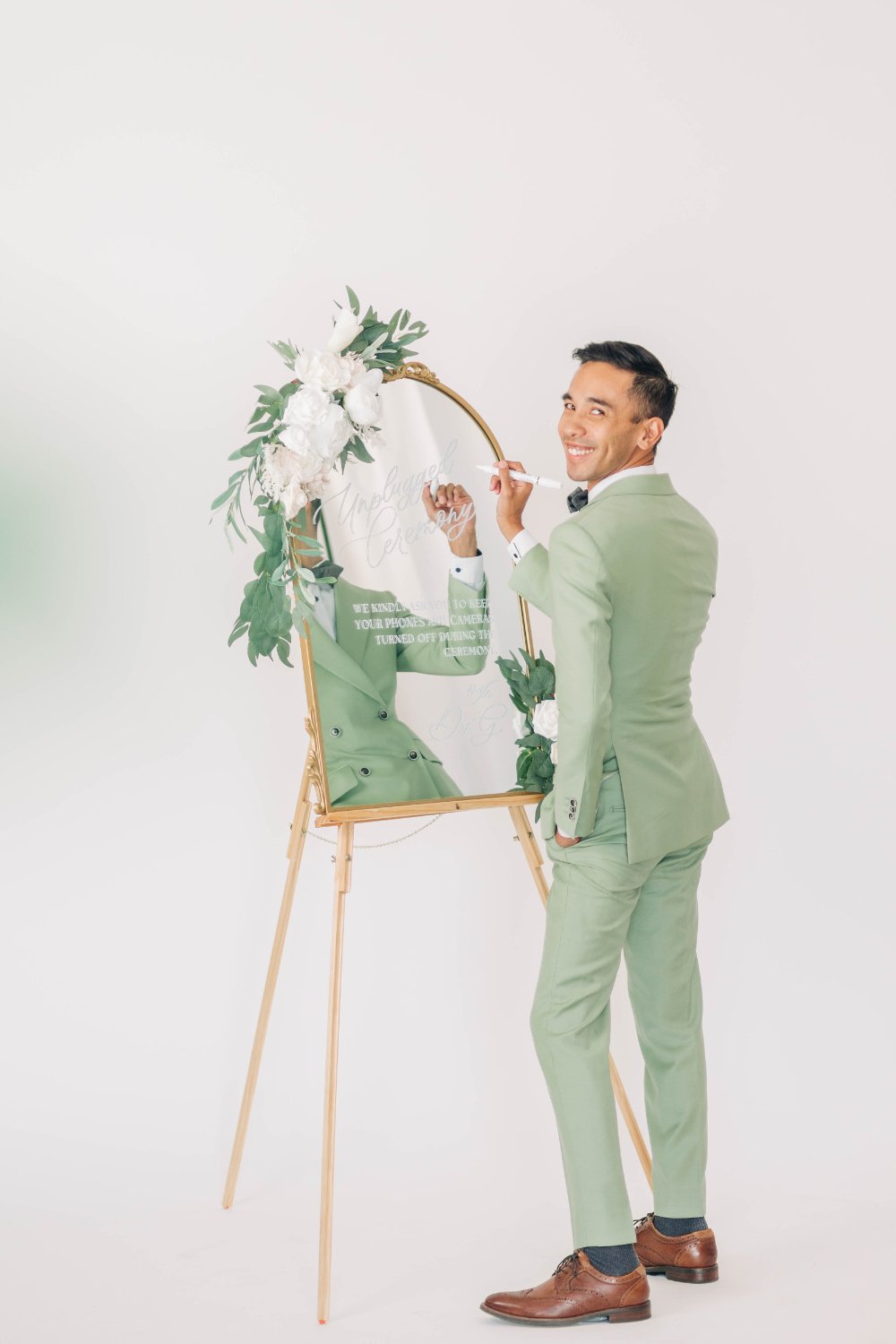
Image Credit: Sydney Mormon Photography
Minimal paper can still look high-end. It just looks… edited (which is the goal).
4–2 Months Out: Confirm Counts, Finalize Materials, Avoid Over-Ordering
This is the logistics chapter. Not glamorous, but it’s where you save the most waste.
Get Serious About Your Guest Count
An eco-friendly wedding is sometimes just… math. If you can reduce over-ordering by 10–15%, you cut a ton of unnecessary waste without changing the guest experience at all.
Consolidate What You’re Buying
Shipping adds up. Try bundling orders, purchasing local when you can, and skipping the “I’ll just order backups” mentality (I know it feels responsible, but it usually turns into leftovers).
Plan Your Outfit With An Afterlife In Mind
If you’re choosing attire right now, ask:
Can I rewear this, tailor it, resell it, or repurpose it?
Would I rent accessories instead of buying them?
Can I borrow a piece that has meaning?
These choices make your eco-friendly wedding feel personal and grounded, not like a sustainability performance.
2 Weeks To Wedding Day: Put A Waste-Saving Exit Plan In Place
This is where you set yourself up to feel proud after the wedding, not overwhelmed.
Make A Leftover Plan
Who takes florals for donation or reuse?
Who packs leftovers and where do they go?
Who gathers signage, frames, candles, and reusable decor?
Assign names. Put it in writing. Your future self will be obsessed with you.
Confirm What “Eco-Friendly” Means At Your Venue
Some venues say “we recycle,” but what they mean is “we have a bin.” Ask what they actually do with compost and recycling. An eco-friendly wedding works best when the infrastructure supports your intentions.
Why Intention Matters More Than Labels
Here’s the truth: you can have all the “eco-friendly” labels in the world and still end up with a lot of waste. And you can also plan an eco-friendly wedding without making it a whole performance, just by choosing fewer but better details, renting what makes sense, and building an experience guests actually engage with.
That’s what I mean when I say an eco-friendly wedding is a lens, not a test you have to pass. Your intention shows in the patterns: the choices you repeat, the clutter you skip, and the pieces that earn their place.

Image Credit: Sydney Mormon Photography
Let’s Make Your Eco-Friendly Wedding Feel Effortless
If you’re planning an eco-friendly wedding and you want it to feel intentional, elevated, and not cluttered with throwaway extras, you’re my kind of people. And if an eco-friendly wedding isn’t part of your plan? Totally fine too. The goal is still the same: thoughtful details and a guest experience that feels personal.
Live watercolor guest portraits and on-site calligraphy and engraving fit beautifully either way because they turn the experience into the keepsake.
So, get in touch, tell me your date, your location, and the vibe you want guests to feel, and I’ll help you build something that actually works in real life.